2007-01-31


2007-01-25
Turning An Axel-Mounted Molecular Wheel
http://www.sciencedaily.com/releases/2007/01/070123111056.htm
How to Make a Starship Enterprise Out of a Floppy Disk

http://www.wikihow.com/Make-a-Starship-Enterprise-Out-of-a-Floppy-Disk
Microwave Oven Can Sterilize Sponges, Scrub Pads
That means that the estimated 90-plus percent of Americans with microwaves in their kitchens have a powerful weapon against E. coli, salmonella and other bugs at the root of increasing incidents of potentially deadly food poisoning and other illnesses.
“Basically what we find is that we could knock out most bacteria in two minutes,” said Gabriel Bitton, a UF professor of environmental engineering. “People often put their sponges and scrubbers in the dishwasher, but if they really want to decontaminate them and not just clean them, they should use the microwave.”
http://www.sciencedaily.com/releases/2007/01/070122143050.htm
2007-01-19
Laying Down the Einstein's Laws
Since my undergraduate days, I have been puzzled by the fact that we have Newton's laws of motion but only Einstein's theory of special relativity... It's time to rename it as more than just a theory.
I propose that we, as physicists, define a set of Einstein's laws, just as we have Newton's laws, Coulomb's law, or Faraday's law.
To paraphrase, the laws he proposes are:
* Einstein's First Law. The laws of physics are the same for all observers no matter what their velocity is, as long as they are not accelerating.
* Einstein's Second Law. The speed of light in a vacuum is the same for all observers.
* Einstein's Third Law. The total energy of a body with momentum p and mass m is (m2c4 + p2c2)1/2.
The third law implies that a body at rest (p = 0) has energy mc2 and that a massless body such as a photon (m = 0) has energy pc, which in turn implies that light carries momentum. These three laws capture the essence of the special theory of relativity. To rope in the general theory, too, we might add:
* Einstein's Fourth Law. No observer can tell the difference between acceleration and the force of gravity based on local measurements.
The general theory is so rich that it's hard to know what else to include.
Other folks have proposed a similar set of laws (see, for example, http://www.geocities.com/ciencia_farma/nat_laws.htm). Please let me know of any other prior art. And please let me know if you can come up with phrasing as elegant as the classic formulation of Newton's third law: "For every action there is an equal but opposite reaction."
powered by performancing firefox
Escape from the Insipid: Our Brains May Be Wired for Daydreaming
Researchers at Dartmouth College may have the answer. They found that a default network of regions in the brain's cortex—a grouping known to be active when the mind is completely unoccupied—is firing away as a person is engaged in routine activities.
Malia Mason, now a postdoctoral researcher of neurocognition at Harvard Medical School, trained subjects in verbal and spatial memory tasks that after four days of continual repetition became quite banal—perfect conditions for thinking about something unassociated with the work at hand. In fact, subjects reported more daydreaming when performing the rehearsed sequences rather then when the tasks were tweaked slightly to introduce a novel stimulus requiring a bit more focus.
On the fifth day, the subjects performed these activities while being surveyed by functional magnetic resonance imaging (fMRI). While the subjects were not performing any task, there was activation in several cortical regions, including parts of the medial prefrontal cortex (involved in executive functions), the premotor cortex (which coordinates body movements), and the cingulate (part of the limbic system that is implicated in memory and learning). When the subjects were asked to perform their well-rehearsed tasks, many of these areas were recruited once again, but when the job was slightly altered, the signals from these areas attenuated.
This finding "suggests that the default network appears to be associated with the production of these thoughts," Mason says.
The research team speculates that when engaged in a mundane task, mind wandering allows people to remain properly aroused. Alternatively, they say, daydreams could be a conduit for uniting experiences from a person's past or present to their future. Or, the brain may just have evolved the ability to handle more than one function at once.
"In a sense, these thoughts reflect an amazing capacity on our part to multitask," Mason explains, expanding on the last possibility. "It's like we have a sense of what we can and what we cannot get away with. In other words, it is as if we have a sense of how much attentional resources we have "left over" and [then we] allocate these resources to working out some problem or anticipating what we have to do in the near future."
Jonathan Schooler, a psychologist at the University of British Columbia, says that Mason's study illustrates that daydreaming is really the default state of the brain. He cautions, however, that while he finds the evidence—published in this week's Science—compelling, the measurements are indirect. "They didn't actually examine activation of the default network specifically during times when individuals were reporting mind wandering versus not," he says. "That's an important additional line of research that needs to be done."
powered by performancing firefox
Ultra-Dense Optical Storage -- On One Photon
While the initial test image consists of only a few hundred pixels, a tremendous amount of information can be stored with the new technique.
The image, a "UR" for the University of Rochester, was made using a single pulse of light and the team can fit as many as a hundred of these pulses at once into a tiny, four-inch cell. Squeezing that much information into so small a space and retrieving it intact opens the door to optical buffering--storing information as light.
First image stored and retrieved from a single photon. (Credit: University of Rochester)

http://www.sciencedaily.com/releases/2007/01/070119094254.htm
powered by performancing firefox
Research removes major obstacle from mass production of tiny circuits
Led by Stephen Chou, the Joseph C. Elgin Professor of Engineering at Princeton, the team worked to troubleshoot one form of nanoimprint lithography, a revolutionary method invented by Chou in the 1990s.
Nanoimprint uses a nanometer-scale mold to pattern computer chips and other nanostructures, and is in marked contrast to conventional methods that use beams of light, electrons or ions to carve designs onto devices.
This technique allows for the creation of circuits and devices with features that are not much longer than a billionth of a meter, or nanometer -- more than 10 times smaller than is possible in today's mass-produced chips, yet more than 10 times cheaper. Because of its unique capabilities and reasonable cost, nanoimprinting is a key solution to the future manufacturing of computer chips and a broad range of nanodevices for use in optics, magnetic data storage and biotechnology, among other disciplines.

http://www.physorg.com/news88264955.html
powered by performancing firefox
Prussian Blue for information storage
http://www.physorg.com/news88263072.html
powered by performancing firefox
2007-01-16
Bungee-Powered Backpack Can Lighten Your Load

http://www.gizmag.com/go/6654/
powered by performancing firefox
2007-01-12
How to play music with barbed wire and chainsaws
And here he is conducting an orchestra made up of violinists, a drummer, a pianist and several chainsaw players. There's a lot more interesting stuff, including a MIDI bow being demonstrated on daytime TV, at this page. (Thanks Sam)
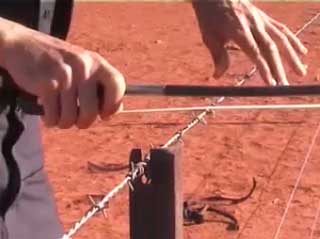
http://musicthing.blogspot.com/2006/12/how-to-play-music-with-barbed-wire-and_30.html
powered by performancing firefox
2007-01-10
Homer’s Ithaca possibly found
The epic poem describes Ithaca as the birthplace of King Ulysses, who wandered decades at sea before a long-awaited homecoming to his queen, Penelope.
Upon coming home to his wife Penelope in Ithaca, Ulysses slaughtered a group of suitors who had been tormenting her for years. This 1812 painting of the scene is by Louis-Vincent-Léon Pallière.
A modern island of Ithaca exists, and for centuries classicists have thought it was the one in the story. But there was always a glitch: Homer asserts that the island was the westernmost of the Ionian archipelago. But the westernmost island is really Kefalonia, which is also much bigger than the place Homer described.
The research team included businesman and amateur archaeologist Robert Bittlestone, heir to a tradition begun by another businessman, the famous Heinrich Schliemann—discoverer of the homeric city of Troy, in 1870
.

http://www.world-science.net/othernews/070110_ithaca.htm
Desktop fabricator may kick-start home revolution
Rapid prototyping machines are already used by designers, engineers and scientists to create one-off mechanical parts and models. These create objects by depositing layer upon layer of liquid or powdered material.
These machines typically cost from $20,000 to $1.5 million, says Hod Lipson from Cornell University, US, who launched the Fab@Home project with PhD student Evan Malone in October 2006.
http://www.newscientisttech.com/article/dn10922-desktop-fabricator-may-kickstart-home-revolution.html
powered by performancing firefox
2007-01-06
France to publish UFO archive online
Jacques Arnould, an official at the National Space Studies Centre, said the French database of around 1,600 incidents would go live in late January or mid-February.
He said the CNES had been collecting statements and documents for almost 30 years to archive and study them.
http://www.msnbc.msn.com/id/16392923
Researchers use brain scans on shoppers
This paper is the latest from the emerging field of neuroeconomics, which investigates the mental and neural processes that drive economic decision-making. The results could have a profound impact on economic theory, because the decision of whether to purchase a product is the most basic and pervasive economic behavior.
Previous imaging studies have found that separate parts of the brain are activated when people are confronted with financial gains versus financial losses. The authors of this latest study believed that distinct brain regions would be activated when people were presented with products they wish to purchase (representing a potential gain) and when they were presented with those products' prices (representing a potential loss). The researchers wanted to see if they could then use this information to predict when a person would decide to buy a product, and when they would pass it up.
http://www.scienceblog.com/cms/researchers-use-brain-scans-on-shoppers-12286.html
The stuff of dreams
This video shows how that it possible to run across an apparently liquid pool of the stuff because your footfalls solidify it. If you stop, you sink.
I like this video better though - it shows how sound waves from a subwoofer produce interesting shapes in a dilatant. If you want to have a go yourself, try this recipe.
2. Auxetic materials - materials that get thicker when stretched. Pull them in one direction and they expand in another.
This video (.mov format) from Bolton University, UK, shows an auxetic foam in action. I like these because they are totally counter-intuitive - you just expect things to get thinner when stretched. Read more about them in a feature here or on this research page.
http://www.newscientist.com/blog/technology/2006/12/stuff-of-dreams.html
Liquid Lakes on Titan
Radar imaging data from the flyby, published this week in the journal Nature, provide convincing evidence for large bodies of liquid. This image, used on the journal's cover, gives a taste of what Cassini saw. Intensity in this colorized image is proportional to how much radar brightness is returned, or more specifically, the logarithm of the radar backscatter cross-section. The colors are not a representation of what the human eye would see.
The lakes, darker than the surrounding terrain, are emphasized here by tinting regions of low backscatter in blue. Radar-brighter regions are shown in tan. The strip of radar imagery is foreshortened to simulate an oblique view of the highest latitude region, seen from a point to its west.
http://saturn.jpl.nasa.gov/multimedia/images/image-details.cfm?imageID=2432
Bush says feds can open mail without warrant
Bush asserted the new authority Dec. 20 after signing legislation that overhauls some postal regulations. He then issued a "signing statement" that declared his right to open mail under emergency conditions, contrary to existing law and contradicting the bill he had just signed, according to experts who have reviewed it.
A White House spokeswoman disputed claims that the move gives Bush any new powers, saying the Constitution allows such searches.
Still, the move, one year after The New York Times' disclosure of a secret program that allowed warrantless monitoring of Americans' phone calls and e-mail, caught Capitol Hill by surprise.
"Despite the president's statement that he may be able to circumvent a basic privacy protection, the new postal law continues to prohibit the government from snooping into people's mail without a warrant," said Rep. Henry Waxman, D-Calif., the incoming House Government Reform Committee chairman, who co-sponsored the bill.
http://seattletimes.nwsource.com/html/nationworld/2003508676_mail04.html
peek at faster Power6, Cell chips
Advertisement
Chipmakers have run into problems increasing chip clock speed--essentially an electronic heartbeat that synchronizes operations in a processor--because higher frequencies have led to unmanageable power consumption and waste heat.
To compensate, Intel and Advanced Micro Devices have turned instead to the addition of multiple processing cores on each slice of silicon. That's effective when computers are juggling numerous tasks at the same time, but increasing the clock speed means an individual task can run faster.
The first-generation Cell Broadband Engine chip, co-developed by IBM, Sony, and Toshiba, has just appeared in Sony's PlayStation 3 game console and can run at 4GHz. The second-generation chip will run at 6GHz, according to the ISSCC program. In addition, the new chip will have a dual power supply that increases memory performance--a major bottleneck in computer designs today.
For servers, IBM has said its Power6 processor, due to ship in servers in 2007, will run between 4GHz and 5GHz. But in the ISSCC program, Big Blue said the chip's clock will tick at a rate "over 5GHz in high-performance applications". In addition, the chip "consumes under 100 watts in power-sensitive applications," a power range comparable to mainstream 95-watt AMD Opteron chips and 80-watt Intel Xeon chips.
http://www.zdnetasia.com/news/hardware/0,39042972,61979080,00.htm
Cancer cure patented
The Johns Hopkins researchers cautioned that their double-punch molecule, described in the December issue of the journal Chemistry Biology, has not yet been tested on animals or humans.
Nevertheless, they believe it represents a promising new strategy for fighting the deadly disease, and have already filed an application for a U.S. patent covering this class of compounds.
http://pressesc.com/01167884024_cancer_cure_patented