2008-10-29

Nearby Solar System Looks Like Our Own at Time Life Formed

A nearby solar system bears a striking similarity to our own solar system, raising the possibility it could harbor Earth-like planets.

Epsilon Eridani, located about 10.5 light-years from our sun, is surrounded by two asteroid belts that are shaped by planets, astronomers at SETI Institute and Harvard-Smithsonian Center for Astrophysics announced today.

But it's the possibility that currently undetected smaller planets could lie within the innermost asteroid belt that make the solar system intriguing to astrobiologists.

"This system probably looks a lot like ours did when life first took root on Earth," said SETI's Dana Backman, lead author of a paper on the 850-million-year-old star that will appear next year in The Astrophysical Journal, in a release.

Back then, the Kuiper Belt of space objects beyond Neptune was much larger. Over time, many of those objects fell into the inner solar system during a period about four billion years ago known as the Late Heavy Bombardment. The barrage of large asteroids pockmarked the rocky planets and possibly created our moon when a large object collided with Earth, expelling a huge amount of material into space.

Epsilon Eridani's evolution could provide insight into how universal these processes are. That's important because our solar system contains a planet — Earth — just far enough from the sun not to be fried but close enough to capture enough energy to support life as we know it. Similar systems
could end up with planets orbiting in the same biological sweet spot.

"Epsilon Eridani looks a lot like the young solar system, so it's conceivable that it will evolve similarly," said astronomer Massimo Marengo of the Harvard-Smithsonian Center for Astrophysics, a co-author of the paper.

http://blog.wired.com/wiredscience/2008/10/nearby-solar-sy.html

Nearby Solar System Looks Like Our Own at Time Life Formed

A nearby solar system bears a striking similarity to our own solar
system, raising the possibility it could harbor Earth-like planets.


Epsilon Eridani, located about 10.5 light-years from our sun, is surrounded by two asteroid belts that are shaped by planets, astronomers at SETI Institute and Harvard-Smithsonian Center for Astrophysics announced today.


But it's the possibility that currently undetected smaller planets could lie
within the innermost asteroid belt that make the solar system intriguing to astrobiologists.


"This system probably looks a lot like ours did when life first took root on Earth," said SETI's Dana Backman, lead author of a paper on the 850-million-year-old star that will appear next year in The Astrophysical Journal, in a release.


Back then, the Kuiper Belt
of space objects beyond Neptune was much larger. Over time, many of
those objects fell into the inner solar system during a period about
four billion years ago known as the Late Heavy Bombardment.
The barrage of large asteroids pockmarked the rocky planets and
possibly created our moon when a large object collided with Earth,
expelling a huge amount of material into space.


Epsilon Eridani's evolution could provide insight into how universal these processes are.
That's important because our solar system contains a planet — Earth —
just far enough from the sun not to be fried but close enough to
capture enough energy to support life as we know it. Similar systems
could end up with planets orbiting in the same biological sweet spot.


"Epsilon Eridani looks a lot like the young solar system, so it's conceivable that it will evolve similarly," said astronomer Massimo Marengo of the Harvard-Smithsonian Center for Astrophysics, a co-author of the paper.

http://blog.wired.com/wiredscience/2008/10/nearby-solar-sy.html

2008-10-07

Holographic Television Coming Soon

We use high-definition television, dark rooms, and surround sound to create an immersive media experience. But for those who want television that more closely resembles the holodeck, there’s good news. A University of Arizona research team has made a significant breakthrough in 3-D displays that could put holographic sets on the market in five to ten years.

A team at the university’s Optical Sciences department, headed by photonics and lasers chair Dr. Nasser Peyghambarian, has created the first rewritable holographic displays that operate from memory:

"This is a prerequisite for any type of moving holographic technology. The way it works presently is not suitable for 3-D images," he said.

The researchers produced displays that can be erased and rewritten in a matter of minutes.

These holographic television would offer multiple types of 3-dimensional viewing experiences:

According to Peyghambarian, they could be constructed as a screen on the wall (like flat panel displays) that shows 3-D images, with all the image writing lasers behind the wall; or it could be like a horizontal panel on a table with holographic writing apparatus underneath.

So, if this project is realized, you really could have a football match on your coffee table, or horror-movie villains jumping out of your wall.

It’s still a long way away from the multisensory experience of the holodeck, but it could mean that next decade’s first person shooters will have you sniping aliens from behind your sofa.

http://io9.com/5059828/holographic-television-coming-soon

2008-09-25

Two Planets Suffer Violent Collision

ScienceDaily (Sep. 24, 2008) — Two
terrestrial planets orbiting a mature sun-like star some 300
light-years from Earth recently suffered a violent collision,
astronomers at UCLA, Tennessee State University and the California
Institute of Technology will report in a December issue of the
Astrophysical Journal.
"It's as if Earth and Venus collided with each other," said Benjamin
Zuckerman, UCLA professor of physics and astronomy and a co-author on
the paper. "Astronomers have never seen anything like this before.
Apparently, major catastrophic collisions can take place in a fully
mature planetary system."

"If any life was present on either planet, the massive collision
would have wiped out everything in a matter of minutes — the
ultimate extinction event," said co-author Gregory Henry, an astronomer
at Tennessee State University (TSU). "A massive disk of
infrared-emitting dust circling the star provides silent testimony to
this sad fate."

http://www.sciencedaily.com/releases/2008/09/080923164646.htm


China takes the leap: Emdrive aka Infinite Improbability Drive now in development


While the rest of the world was in some kind of mass coma over the past
year, China decided to have a hand at building the highly controversial
Emdrive (electromagnetic drive) -- an engine that uses microwaves to
transform electrical energy into thrust, all in a comparably
light-weight, efficient package. The end result could mean 41 day
journeys to Mars, not to mention terrestrial vehicle propulsion and
satellite applications. Perpetual motion
malarkey you say? British scientist and originator of the concept,
Roger Shawyer of Satellite Propulsion Research Ltd. (SPR), assures you
it's nothing of the kind, and Chinese Professor Yang Juan concurs.
Research headed by Juan at Northwestern Polytechnical University (NPU)
in Xi'an commenced in June 2007, and a thruster now being built based
on Shawyer's theories is scheduled for completion by the end of this
year. Meanwhile in the US: cue the sound of crickets.

http://blog.wired.com/defense/2008/09/chinese-buildin.html
http://www.engadget.com/2008/09/25/china-takes-the-leap-emdrive-aka-infinite-improbability-drive-n/

2008-08-24

A Plane With Wings Of Glass?

ScienceDaily (June 24, 2008) — Imagine a plane that has wings made out of glass. Thanks to a major breakthrough in understanding the nature of glass by scientists at the University of Bristol, this has just become a possibility.

Despite its solid appearance, glass is actually a 'jammed' state of matter that moves very slowly. Like cars in a traffic jam, atoms in a glass can't reach their destination because the route is blocked by their neighbours, so it never quite becomes a 'proper' solid.

For more than 50 years most scientists have tried to understand just what glass is. Work so far has concentrated on trying to understand the traffic jam, but now Dr Paddy Royall from the University of Bristol, with colleagues in Canberra and Tokyo, has shown that the problem really lies with the destination, not with the traffic jam.

Publishing June 22, 2008, in Nature Materials, the team has revealed that glass 'fails' to be a solid due to the special atomic structures that form in a glass when it cools (ie, when the atoms arrive at their destination).

UnoCycle single-wheel bike just might be real

unocycle_main.jpg

You've seen the Noah, marveled at the Embrio
— isn't it time you saw a one-wheeled motorcycle that might
actually be real? Witness the UnoCycle, a single-wheel, single-rider
(please don't test that limit) vehicle that appears to be based on
gyroscopic tech similar to a Segway and, more importantly, has
photographic evidence of its existence. Of guys riding it and
everything.


Still in development, the Uno's top speed is 15 mph, but the
inventor, Ben Gulak, suspects it could go as high as 40. That's no
Harley, but it's faster than a Segway, and remember this is a
battery-powered machine that you never need to fill up. Gulak says he's
getting lots of interest lately — we hope he invests a little of
his incoming finances into a less-skeletal website.

2008-08-08

Southern California Hot Spot Hits 812 Degrees, Baffles Experts

The ground is so hot in one part of Southern California it can melt the shoes right off your feet.

An unexplained "thermal anomaly" caused a patch of land in Ventura County, just north of Los Angeles, to reach a temperature of over 800 degrees on Friday, baffling experts who have been monitoring the area for weeks.

The anomaly was discovered after the land got so hot that it started a brush fire and burned three acres last month.

Firefighters were brought to the scene after reports of a blaze, but by the time they arrived only smoldering dirt and brush remained.

http://www.foxnews.com/story/0,2933,398484,00.html

2008-08-01

Phoenix Lander Has Touched Martian Water For the First Time

NASA just announced that the Phoenix Lander has successfully scooped up a Martian water ice sample and placed it in its oven for scientific analysis. "Mars Odyssey discovered this ice six years ago, but we've now touched it and tasted it, which is something that hasn't been done before," said a scientist at today's press conference. The sample has been dubbed the "Wicked Witch" (because it's meeeelting, meeeelting—get it?) and it will continue to be analyzed over the course of the coming weeks as data trickles in. Exciting, exciting stuff from this very successful mission. More details and new hi-res surface images to follow.


"Major Discovery" From MIT Primed to Unleash Solar Revolution

Scientists mimic essence of plants' energy storage system.

In a revolutionary leap that could transform solar power from a marginal, boutique alternative into a mainstream energy source, MIT researchers have overcome a major barrier to large-scale solar power: storing energy for use when the sun doesn't shine.

Until now, solar power has been a daytime-only energy source, because storing extra solar energy for later use is prohibitively expensive and grossly inefficient. With today's announcement, MIT researchers have hit upon a simple, inexpensive, highly efficient process for storing solar energy.

Requiring nothing but abundant, non-toxic natural materials, this discovery could unlock the most potent, carbon-free energy source of all: the sun. "This is the nirvana of what we've been talking about for years," said MIT's Daniel Nocera, the Henry Dreyfus Professor of Energy at MIT and senior author of a paper describing the work in the July 31 issue of Science. "Solar power has always been a limited, far-off solution. Now we can seriously think about solar power as unlimited and soon."

Inspired by the photosynthesis performed by plants, Nocera and Matthew Kanan, a postdoctoral fellow in Nocera's lab, have developed an unprecedented process that will allow the sun's energy to be used to split water into hydrogen and oxygen gases. Later, the oxygen and hydrogen may be recombined inside a fuel cell, creating carbon-free electricity to power your house or your electric car, day or night.

The key component in Nocera and Kanan's new process is a new catalyst that produces oxygen gas from water; another catalyst produces valuable hydrogen gas. The new catalyst consists of cobalt metal, phosphate and an electrode, placed in water. When electricity - whether from a photovoltaic cell, a wind turbine or any other source - runs through the electrode, the cobalt and phosphate form a thin film on the electrode, and oxygen gas is produced.

Combined with another catalyst, such as platinum, that can produce hydrogen gas from water, the system can duplicate the water splitting reaction that occurs during photosynthesis.

The new catalyst works at room temperature, in neutral pH water, and it's easy to set up, Nocera said. "That's why I know this is going to work. It's so easy to implement," he said.

http://www.truthout.org/article/major-discovery-from-mit-primed-unleash-solar-revolution

2008-07-23

Advance brings low-cost, bright LED lighting closer to reality

WEST LAFAYETTE, Ind. -


Researchers at Purdue University have overcome a major obstacle in
reducing the cost of "solid state lighting," a technology that could cut electricity consumption by 10 percent if widely adopted.

The technology, called light-emitting diodes, or LEDs, is about four
times more efficient than conventional incandescent lights and more
environmentally friendly than compact fluorescent bulbs. The LEDs also
are expected to be far longer lasting than conventional lighting,
lasting perhaps as long as 15 years before burning out.

"The LED technology has the potential of
replacing all incandescent and compact fluorescent bulbs, which would
have dramatic energy and environmental ramifications," said Timothy D.
Sands, the Basil S. Turner Professor of Materials Engineering and
Electrical and Computer Engineering.


The LED lights are about as efficient as compact fluorescent lights, which contain harmful mercury.


2008-07-02

The crowd within

THAT problem solving becomes easier when more minds are put to the task is no more than common sense. But the phenomenon goes further than that. Ask two people to answer a question like “how many windows are there on a London double-decker bus” and average their answers. Their combined guesses will usually be more accurate than if just one person had been asked. Ask a crowd, rather than a pair, and the average is often very close to the truth. The phenomenon was called “the wisdom of crowds” by James Surowiecki, a columnist for the New Yorker who wrote a book about it. Now a pair of psychologists have found an intriguing corollary. They have discovered that two guesses made by the same person at different times are also better than one.

That is strange. Until now, psychologists have assumed that when people make a guess, they make the most accurate guess that they can.

Ask them to make a second and it should, by definition, be less accurate. If that were true, averaging the first and second guesses should decrease the accuracy. Yet Edward Vul at the Massachusetts Institute of Technology and Harold Pashler at the University of California, San Diego, have revealed in a study just published in Psychological Science that the average of first and second guesses is indeed better than either guess on its own.

The two researchers asked 428 people eight questions drawn from the “CIA World Factbook”: for example, “What percentage of the world’s airports are in the USA?” Half the participants were unexpectedly asked to make a second, different guess immediately after they completed the initial questionnaire. The other half were asked to make a second guess three weeks later.

Dr Vul and Dr Pashler found that in both circumstances the average of the two guesses was better than either guess on its own. They also noticed that the interval between the first and second guesses determined how accurate that average was. Second guesses made immediately improved accuracy by an average of 6.5%; those made after three weeks improved the accuracy by 16%.

http://www.economist.com/science/displaystory.cfm?story_id=11614183


2008-07-01

Laughter May Outlive Humans—and Even Numbers

Futurologists envision a world a million years from now in which the entire solar system has been turned into computronium
and nanobots transform our garbage into foie gras. But in my
experience, the repeated sin of futurologists is that they often
extrapolate from what is new rather than from what is old. Computers
and nanotechnology, impressive though they are, are things of
relatively recent origin. As such, they are unlikely to be around for
very long.


To find something that will pretty certainly endure into the distant
future, we are obliged, paradoxically enough, to go back much farther
into the past. And if we could cast a look back several million years,
we would see, among other things, laughter and numbers. So we can be
pretty confident that laughter and numbers will survive long after most
of what we’re familiar with is gone.


The insight that old things tend to last and new things tend to disappear flows from the Copernican principle.
This principle says, in essence, “You’re not
special.” Before Copernicus, we imagined that we occupied a very
special place at the center of the universe. Now we know better: We are
on an average planet in an average galaxy in an average cluster. But
the Copernican principle applies to time as well as to space. If there
is nothing special about our perspective, we are unlikely to be
observing any given thing at the very beginning or the very end of its
existence. And that rather obvious point can lead to some interesting
predictions.

Consider the longevity of the human race. If there is nothing
special about the moment at which we observe our species, then it is 95
percent certain that we are seeing Homo sapiens in the middle 95
percent of its existence—not the first fortieth (2½
percent) or the last fortieth (2½ percent). Humans have already
been around for about 200,000 years. That means we can, with 95 percent
confidence, expect the species to endure for at least another 5,100
years (1/39 x 200,000) but for no more than 7.8 million years (39 x
200,000).


It was Richard Gott III, an astrophysicist at Princeton University,
who pioneered this sort of reasoning. In a paper published in Nature on
May 27, 1993, “Implications of the Copernican Principle for Our Future Prospects,”
Gott noted that the Copernican-based calculation gives H. sapiens an
expected total longevity comparable to that of other hominid species
(H. erectus lasted 1.6 million years) and of mammal species in general
(whose average span is 2 million years). It also gives us a decent shot
at being around a million years from now.


What else might be around in the Year Million? Consider something of
recent origin, like the Internet. The Internet has existed for about 25
years now (as I learned by going on the Internet and looking at Wikipedia).
By Copernican reasoning, this means we can be 95 percent certain that
it will continue to be around for another seven-plus months but that it
will disappear within 975 years. So in the Year Million, there will
almost certainly be nothing recognizable as the Internet. (This is,
perhaps, not a terribly surprising conclusion.) Ditto for baseball.
Ditto for what we call industrial technology, which, having come into
existence a little more than two centuries ago, is likely to be
superseded by something strange and new in the next 10,000 years.


2008-06-25

The Web Time Forgot

MONS, Belgium — On a fog-drizzled Monday afternoon, this fading
medieval city feels like a forgotten place. Apart from the obligatory
Gothic cathedral, there is not much to see here except for a tiny
storefront museum called the Mundaneum, tucked down a narrow street in
the northeast corner of town. It feels like a fittingly secluded home
for the legacy of one of technology’s lost pioneers: Paul Otlet.

In 1934, Otlet sketched out plans for a global network of computers (or
“electric telescopes,” as he called them) that would allow
people to search and browse through millions of interlinked documents,
images, audio and video files. He described how people would use the
devices to send messages to one another, share files and even
congregate in online social networks. He called the whole thing a
“réseau,” which might be translated as
“network” — or arguably, “web.”

Historians typically trace the origins of the World Wide Web through
a lineage of Anglo-American inventors like Vannevar Bush, Doug
Engelbart and Ted Nelson. But more than half a century before Tim
Berners-Lee released the first Web browser in 1991, Otlet (pronounced
ot-LAY) described a networked world where “anyone in his armchair
would be able to contemplate the whole of creation.”

Although
Otlet’s proto-Web relied on a patchwork of analog technologies
like index cards and telegraph machines, it nonetheless anticipated the
hyperlinked structure of today’s Web. “This was a Steampunk
version of hypertext,” said Kevin Kelly, former editor of Wired,
who is writing a book about the future of technology.


2008-06-17

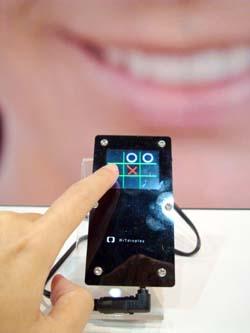
RiTdisplay develops OLED touch panels

Taiwan-based RiTdisplay has developed OLED panels with touch functionality, which is now ready for volume production once orders are received, according to the company.

The OLED capacity touch panel adopts STMicroelectronics' controller IC, and currently three sizes – 1.1-, 1.8- and 3.1-inch –have been developed, the company said.

RiTdisplay is a leading supplier of OLED panels, with its focus on the passive matrix type. It said 70% of its clients are brand name vendors.


RiTdisplay OLED touch panel

2008-06-11

Scientists develop fastest computer

WASHINGTON - Scientists unveiled the world's fastest supercomputer on Monday, a $100 million machine that for the first time has performed 1,000 trillion calculations per second in a sustained exercise.

The technology breakthrough was accomplished by engineers from the Los Alamos National Laboratory and IBM Corp. on a computer to be used primarily on nuclear weapons work, including simulating nuclear explosions.

The computer, named Roadrunner, is twice as fast as IBM's Blue Gene system at Lawrence Livermore National Laboratory, which itself is three times faster than any of the world's other supercomputers, according to IBM.

"The computer is a speed demon. It will allow us to solve tremendous problems," said Thomas D'Agostino, head of the National Nuclear Security Administration, which oversees nuclear weapons research and maintains the warhead stockpile.

But officials said the computer also could have a wide range of other applications in civilian engineering, medicine and science, from developing biofuels and designing more fuel-efficient cars to finding drug therapies and providing services to the financial industry.

To put the computer's speed in perspective, it has roughly the computing power of 100,000 of today's most powerful laptops stacked 1.5 miles high, according to IBM. Or, if each of the world's 6 billion people worked on hand-held computers for 24 hours a day, it would take them 46 years to do what the Roadrunner computer can do in a single day.

http://news.yahoo.com/s/ap/20080609/ap_on_hi_te/fastest_computer

New 'super-paper' is stronger than cast iron

Punching your way out of a paper bag could become a lot harder,
thanks to the development of a new kind of paper that is stronger than
cast iron.


The
new paper could be used to reinforce conventional paper, produce
extra-strong sticky tape or help create tough synthetic replacements
for biological tissues, says Lars Berglund from the Swedish Royal Institute of Technology in Stockholm, Sweden.


Despite
its great strength, Berglund's "nanopaper" is produced from a
biological material found in conventional paper: cellulose. This long
sugar molecule is a principal component of plant cell walls and is the
most common organic compound on Earth.


Wood is typically about half cellulose, mixed with other structural compounds.


Support network


In
plant cell walls individual cellulose molecules bind together to
produce fibres around 20 nanometres in diameter, 5000 times thinner
than a human hair. These fibres form tough networks that provide the
cell walls with structural support.


"Cellulose
nanofibres are the main reinforcement in all plant structures and are
characterised by nanoscale dimensions, high strength and toughness,"
Berglund told New Scientist.


Cellulose
is extracted from wood to make paper, is the basis of cellophane, and
has also recently been used by materials scientists developing novel
plastic materials. But they have used it only as a cheap filler
material, ignoring its mechanical properties.


However,
the mechanical processes used to pulp wood and process it into paper
damage the individual cellulose fibres, greatly reducing their
strength. So Berglund and colleagues have developed a gentler process
that preserves the fibres' strength.


Tough as iron


The
new method involves breaking down wood pulp with enzymes and then
fragmenting it using a mechanical beater. The shear forces produced
cause the cellulose to gently disintegrate into its component fibres.


The
end result is undamaged cellulose fibres suspended in water. When the
water is drained away Berglund found that the fibres join together into
networks held by hydrogen bonds, forming flat sheets of "nanopaper".


Mechanical
testing shows it has a tensile strength of 214 megapascals, making it
stronger than cast iron (130 MPa) and almost as strong as structural
steel (250 MPa).


Normal
paper has a tensile strength less than 1 MPa. The tests used strips 40
millimetres long by 5mm wide and about 50 micrometres thick.

http://technology.newscientist.com/article/dn14084-new-superpaper-is-stronger-than-cast-iron.html?DCMP=ILC-hmts&nsref=news1_head_dn14084


2008-06-02

Say goodbye to paper tickets

The International Air Transport Association (IATA) has bid farewell to
the paper ticket on the eve of the industry’s conversion to 100%
electronic ticketing.

“Today we say goodbye to an industry icon,” said Giovanni
Bisignani, IATA’s Director General and CEO. “The paper
ticket has served us well, but its time is over. After four years of
hard work by airlines around the world, tomorrow marks the beginning of
a new, more convenient and more efficient era for air travel.”

Paper tickets date back to the 1920s. Each airline used a different
form with varying rules. Airlines soon recognised the need for
standardisation of traffic documents, regulations and procedures to
support the growth of an industry that spanned the world. In 1930, the
IATA Traffic Committee developed the first standard hand-written ticket
for multiple trips. These same standards served the industry into the
early 1970s.

The organisations says a paper ticket costs an average of US$10 to
process versus US$1 for an electronic ticket. With over 400 million
tickets issued through IATA’s settlement systems annually, the
industry will save over US$3 billion each year.

To complete the conversion IATA has contacted 60,000 travel agents in
more than 200 countries to collect the remaining unused paper tickets
in the system – some 32 million worldwide. These will be securely
reclaimed, destroyed and recycled. “An era has ended. If you have
a paper ticket, it’s time to donate it to a museum,” said
Bisignani.

2008-05-30

New York And London Finally Connected Via Undersea Tunnel

The telectroscope, a looking-glass tunnel connecting New York and
London has been completed at last, over 100 years after it was
abandoned. The tunnel, which starts in Brooklyn, was designed and
partly executed by late 1800s inventor Alexander Stanhope St. George. A
series of mirrors, cameras and a large underground tunnel, connects the
two cities. More details about the scope and gallery after the jump.


The telectroscope's inventor, St. George, was passionately committed to
the idea of being able to connect London and New York without having to
move. He constructed parts of a great shaft which unfortunately
collapsed on many of his workers in 1892. The project was never
completed. His ancestor Paul St. George stumbled upon the original
blueprints and details and brought the telectroscope to life.